What Heavy Haul Trucking Is and Why It’s Important
October 7th, 2020
Heavy haul transport plays an important role in the trucking and logistics industries and in the economy as a whole. Without the valuable services of heavy haulers, large equipment and supplies could not be safely or legally transported.
Heavy haul trucking presents challenges to drivers and fleet managers because of the sheer size of the freight and various local, state, and federal regulations. It requires using the proper type of commercial trailer, whether for standard freight or oversize hauling.
Before you get on the road, you must understand what heavy hauls carry, the different types of heavy haulers, and the regulations that may affect your equipment choices and freight.
What Is a Heavy Haul Load?
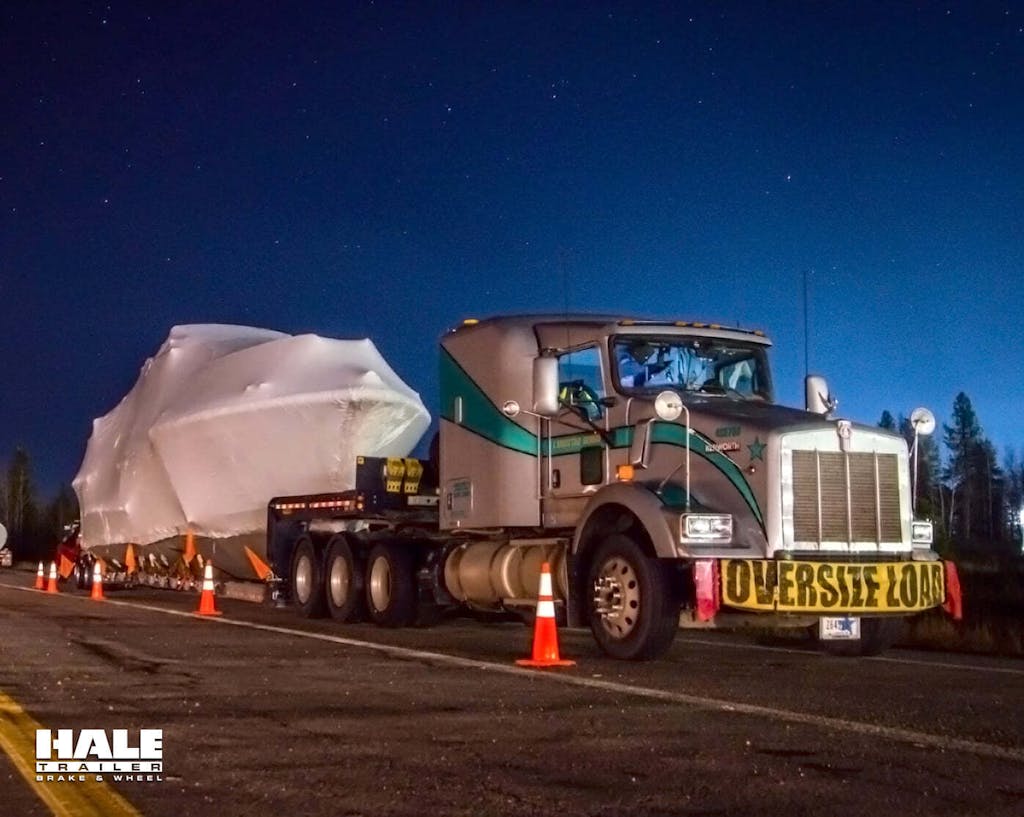
Any freight that exceeds the standard legal limit for size set by the state, local, and federal governments is considered oversize or a heavy haul load. Heavy haul trucking may also be known as a superload, machinery hauling, oversize hauling, or heavy equipment trucking. The maximum size for standard shipments according to the U.S. Department of Transportation Federal Highway Administration (FHWA) is:
- Width: 8’6”
- Height: ~ 13’6” (there is no federal guideline for height; states are allowed to set their own)
- Length: 48’ to 53’
- Gross weight: 80,000 lbs.
- Steer axle: 12,000 lbs.
- Single axle: 20,000 lbs.
- Tandem axle: 34,000 lbs.
The maximum size for heavy hauls depends on the type of heavy haul trailer[AM1] being used, the state(s) where freight is being transported, and the number of axles on the trailer. Federal regulations for the amount of weight that can be hauled on each axle are calculated using the bridge weight formula.
Types of Heavy Haul Trailers
Heavy equipment trucking includes choosing a trailer that meets the needs of your freight. Many heavy haul trailers are customized for specific loads, but there are a few general categories of heavy haulers:
- Extendable flatbed trailers: For longer loads like pipes or lumber
- Extendable double drop deck trailers: For extra tall freight that exceeds the 8’6” limit
- Removable gooseneck (RGN) trailers: For extra-long and heavy loads; offer more effortless loading and unloading
- Step deck trailers: For extra tall freight that exceeds the 8’6” limit; they only have one deck in contrast to the double drop deck
- Axle configuration: up to 13 axles for heavier freight
Some examples of cargo that may be transported via heavy haul trucking are:
- Turbines
- Homes
- Agricultural equipment
- Cranes
- Timber
- Boilers
- Excavators
- Piping
- Planes
- Boats
- Mining equipment
Permitting for Heavy Haul Trucking
Oversized loads often need special permitting to comply with local regulations. The Federal government is not responsible for issuing permits. Each state has its own permits, so it’s essential to check for specific permitting by state.
There are several reasons for permits and/or other special consideration, which may include:
- Time of day when oversize loads are permitted to be transported
- Amount of time allotted to transport freight
- Seasonality
- Type of freight
- Special lights: Rotating LED lights are required by some states
- Safety flags: Neon orange or red flags on the corners of the vehicle
- Banners: “Oversized Load” banners on front and back of vehicle
- Police or escort vehicles (PC/EV) in some states
- Non-divisible loads (e.g., bulldozers, modular homes, scrapers, etc.)
- Special permits for heavy hauls during disaster relief
Obtaining the appropriate permits for heavy haul trucking requires knowledge of city, state, and Federal regulations. It can be helpful to partner with experienced heavy haul logistics companies familiar with permitting rules. If you’re looking for a heavy haul trailer for sale, partner with knowledgeable trailer wholesalers that can help you choose the right heavy haul trailer for your needs.
In addition to permitting, shippers may require that freight carried on open-deck or flatbed trailers be covered to protect from rain or snow.
Certain types of trailers must be used to ensure safety and compliance for an oversize load. Let’s examine different heavy haul trailer options.
How Much Does Heavy Haul Trucking Cost?
Since there are so many variables in heavy haul trucking, it’s difficult to give a general price, but there are a few common factors that contribute to the price. These include:
- Size and weight of the load
- Distance traveling
- Type of heavy haul equipment
- Permits needed for each jurisdiction
- Additional labor or equipment
In addition, confirm that all stakeholders are appropriately licensed and insured to protect freight and equipment in the unfortunate event of an accident.
Let Hale Trailer Help with Your Heavy Hauling
Heavy haul trucking can be a complicated mix of finding the right trailer for your freight, getting necessary documentation and permits, and partnering with the best logistics companies. With so much to consider, let Hale Trailer assist you with choosing the best type of heavy haul trailer.
Our knowledgeable team has years of experience helping owner/operators and fleet managers find the equipment for any trucking job and is ready to serve you at one of our 12 locations.
All the information on this website – https://www.haletrailer.com – is published in good faith and for general information purposes only. Hale Trailer Brake and Wheel does not make any warranties about the completeness, reliability and accuracy of this information. Any action you take upon the information you find on this website, is strictly at your own risk. Hale Trailer Brake and Wheel will not be liable for any losses and/or damages in connection with the use of our website.